
FILM COMPARISON
Choosing between carbon and ceramic window tint? The biggest reason to upgrade to ceramic is heat rejection. Carbon is a practical choice when you want UV protection, a darker appearance, and improved comfort at a lower price.
If heat through the windows bothers you on your daily drive, ceramic is usually worth considering. If your main goals are appearance and privacy on a tighter budget, carbon may be enough. You can choose your shade separately—better heat protection does not have to mean darker windows.
What Are You Paying More for with Ceramic Tint?
Picture two cars with the same shade of tint. From outside, their windows may look similar, but the films can handle solar heat differently. Ceramic technology adds heat rejection that darkness alone cannot provide.
That difference matters when sunlight hits your arm on a commute or passengers sit beside a sunny window. Tint helps reduce incoming heat while you drive; it does not keep a parked car cool indefinitely or replace air conditioning.
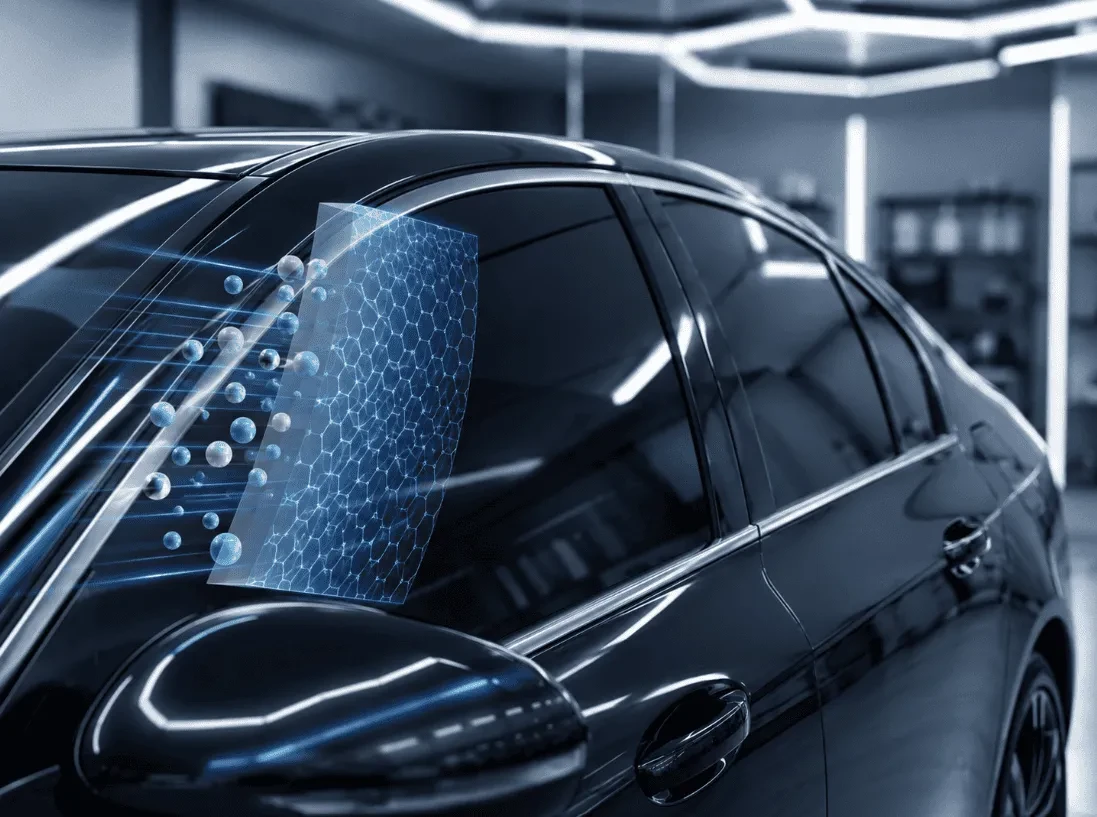
Carbon film uses carbon technology, while ceramic film incorporates ceramic technology to manage solar energy. Some films combine both. The exact construction and performance depend on the product.
Carbon IR vs. Nano Ceramic IR at a Glance
Here is how the UNION films we install compare. The comparison reflects the specifications of these UNION products.
| What matters | Carbon IR | Nano Ceramic IR |
|---|---|---|
| Heat rejection | Reduces infrared heat for improved comfort. | Superior heat rejection with an additional ceramic layer. |
| UV protection | Blocks UV rays. | Provides 99.9% UV protection. |
| Technology | Carbon technology. | Carbon technology with an additional ceramic layer and anti-scratch layer. |
| Main reason to choose it | Comfort, appearance, and privacy with a lower upfront cost. | Greater emphasis on heat control and everyday driving comfort. |
Nano Ceramic IR’s ceramic layer does not interfere with electronic or radio signals. Its anti-scratch layer adds surface protection, but the film is not scratch-proof.
Explore the available options on our Carbon IR and Nano Ceramic IR pages.
Does Ceramic Tint Have to Be Dark?
No. Film technology controls performance; the shade controls how much visible light passes through. A lower visible light transmission (VLT) percentage looks darker, but it does not tell you how much heat or UV the film blocks.
For example, 70% Nano Ceramic IR is our lightest, virtually clear option. It offers superior heat rejection and 99.9% UV protection without the appearance of a dark shade. Someone seeking privacy may prefer a darker option, while someone who wants a lighter look can still prioritize heat control.
Our window tint shade guide explains the percentages and how they affect appearance and visibility.
Which Film Fits the Way You Drive?
- You spend a lot of time driving in direct sun: Nano Ceramic IR is the stronger choice when reducing heat through the glass is your priority.
- You mainly want a new look and more privacy: Carbon IR can meet those goals without the higher cost of the ceramic upgrade.
- You want to keep the windows looking light: Consider a lighter ceramic shade rather than choosing dark film just for heat control.
- You are comparing quotes: Compare the same windows and shade, and check whether old-film removal is included. A lower price for fewer windows is not an equivalent package.
For a fair performance comparison, ask for heat-rejection figures at a similar shade. Total solar energy rejected (TSER) describes overall solar heat rejection; an infrared figure measures a different part of performance.
Common Questions About Carbon and Ceramic Tint
Is ceramic tint worth the extra cost?
It can be, especially if heat is the reason you are tinting the car. If appearance and privacy matter more to you than the extra heat rejection, carbon can be the better fit for your budget.
Will ceramic tint make my windows look different from carbon?
Not necessarily. Shade, the existing glass, and lighting all affect the result. Samples at a similar percentage help you compare the appearance.
Does carbon tint protect the interior from UV rays?
Carbon IR blocks UV rays, helping reduce UV exposure inside the car. UV protection and heat rejection are separate benefits, so choosing between films should involve more than their UV performance alone.
Does ceramic tint need special care?
Use gentle cleaning methods with either film. Once cured, clean with an ammonia-free cleaner or mild soap and water and a fresh, clean microfiber cloth. Avoid abrasives. See our window tint aftercare guide for more detail.
Choose the Film, Then Choose the Shade
Start with what you want to improve—heat, appearance, privacy, or a combination. San Diego Best Tint can quote Carbon IR and Nano Ceramic IR for the same coverage so you can decide whether the upgrade fits your priorities. Both carry our automotive lifetime warranty against peeling, bubbling, or fading for as long as you own the car.
Product reference: UNION Window Films.