
INSTALLATION GUIDE
A DIY tint kit can cost less up front, while professional installation adds experienced preparation, fitting, and aftercare support. Professional installation buys preparation, fitting experience, and someone to return to if there is a problem.
Even a precut kit still needs clean glass, careful handling, accurate placement, and a smooth bond. If you want a consistent finish with less trial and error, an experienced installer is usually the more practical choice.
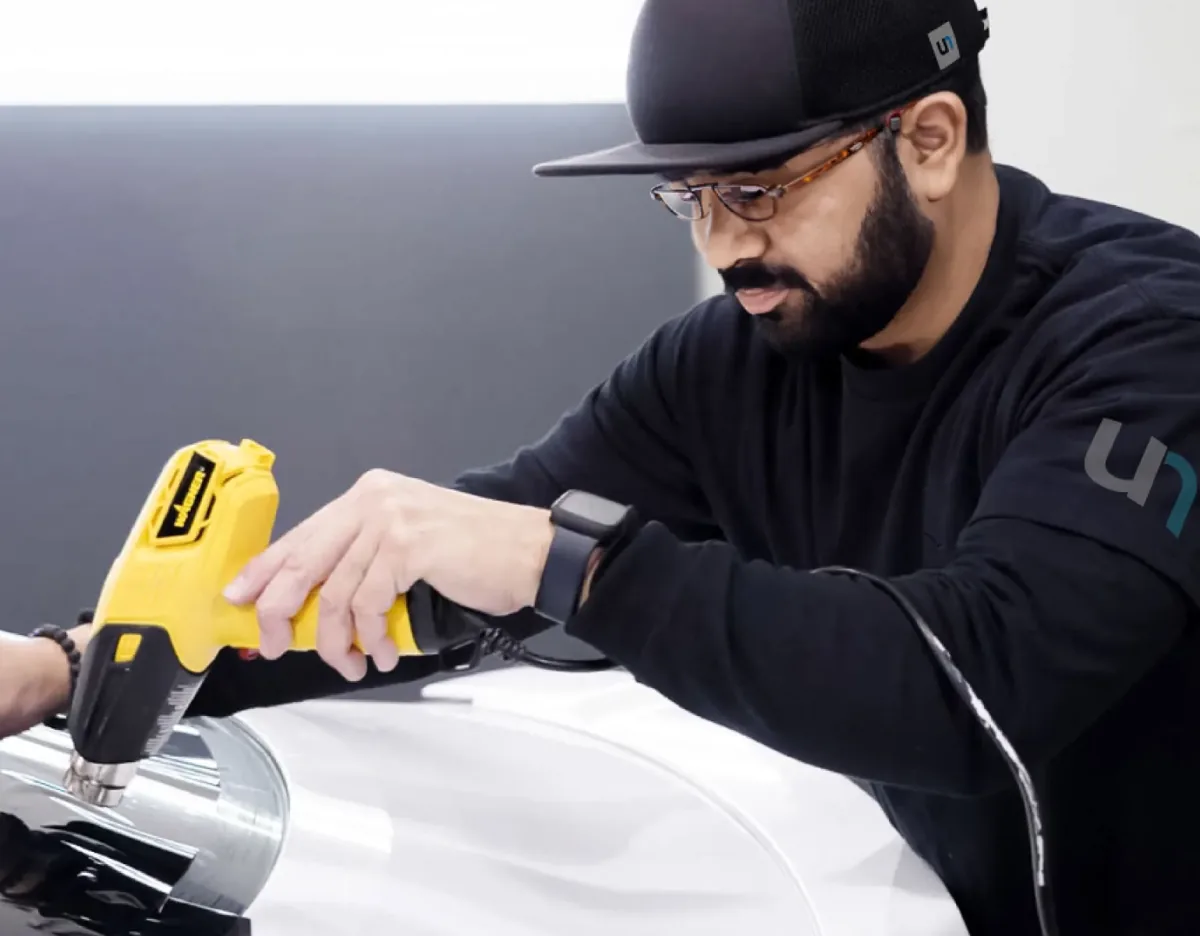
Where DIY Window Tint Gets Difficult
Imagine applying a large screen protector inside a narrow door opening—then dealing with curved glass, seals, and a material that can crease as you reposition it. Small preparation errors become obvious once the film is on the window.
Dust, leftover adhesive, and debris near the seals can spoil the result. A crease does not simply disappear during curing. Cutting film against the vehicle also calls for care around glass, trim, and other surfaces.
Large rear windows and windshield installations add access and shaping challenges. A kit sized for the vehicle does not remove the need to check the actual fit.
What a Professional Installation Should Include
- A clear film choice: the product, shade, and windows being covered should be agreed before work begins.
- Surface preparation: glass and surrounding areas need careful cleaning, including any old adhesive.
- Interior protection: trim, dashboard areas, and other nearby surfaces should be protected as appropriate for the work.
- Fitting and finishing: the installer should check edges, placement, and the finished view.
- Aftercare and support: you should know how to care for the film and whom to contact with a concern.
A computer-cut pattern can help with consistent sizing, but the installer’s preparation and handling still matter. Careful handling and a final inspection complete the process.
What to Compare Before Choosing
Film performance and shade. A shade describes visible light transmission, not total heat rejection. Choose the film technology around your comfort goals, then choose an appropriate shade.
Total project cost. Check whether the quote includes the same windows, old-film removal, and warranty. A cheap kit followed by paid removal and reinstallation can erase the initial saving.
Existing glass. Existing privacy glass affects the final appearance. Confirm applicable requirements for each window before committing to a shade.
Aftercare. Follow the installer’s window-operation and cleaning instructions rather than testing a new edge or pressing a mark yourself.
Choosing Professional Support
Look for careful work, clear communication, examples of finished installations, and a straightforward process for concerns. Our questions to ask a window tint installer can help you compare your options. Ask about the specific film warranty and installation support including the duration and covered issues.
Compare Your Installation Options
San Diego Best Tint offers mobile window tinting at your home or workplace throughout San Diego County. We can explain Carbon IR and Nano Ceramic IR options for your vehicle and coverage. Our automotive films carry a lifetime warranty against peeling, bubbling, or fading for as long as you own the car.