
TINT TROUBLESHOOTING
Window tint’s condition is a better guide to replacement than age alone. Look at its condition: peeling edges, persistent bubbles, an unwanted purple cast, or a hazy view are more useful warning signs than age alone.
If the tint still looks even, stays bonded, and gives you a clear view, age alone is not a reason to remove it. If the film is lifting or affecting visibility, have it inspected before deciding what to replace.
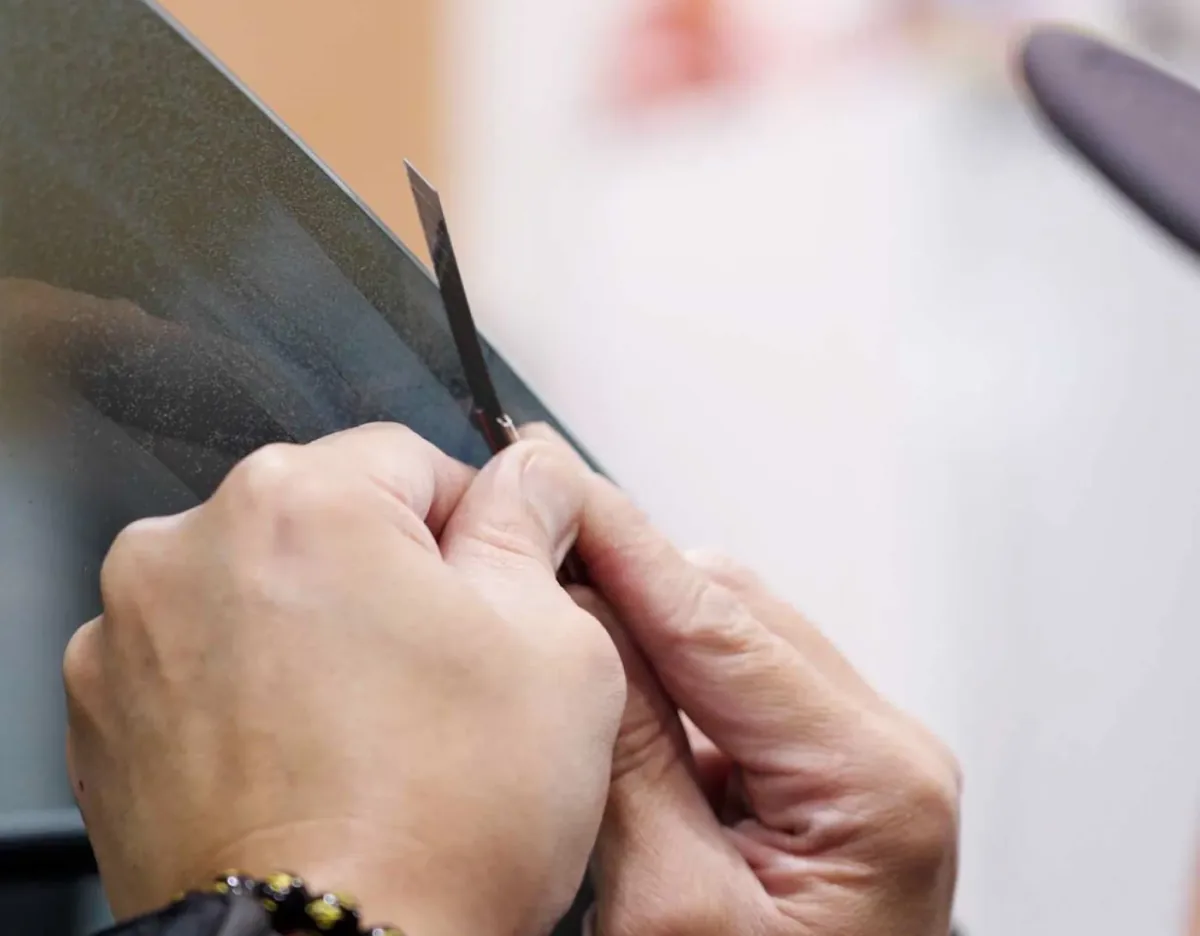
Why Does Window Tint Turn Purple?
Some dyed films change color as their colorants degrade over time. Instead of the original neutral shade, you may notice a purple or uneven appearance. This is a change within the film; washing the window will not restore its original color.
Color stability varies with the film’s materials and construction. When choosing a replacement, ask what the warranty says about fading and discoloration.
A color change alone also cannot tell you exactly how much UV protection or heat rejection remains. An inspection can help assess its condition and remaining performance.
Four Signs Worth Checking
- Peeling edges: corners or borders that curl away from the glass can collect dirt and become more noticeable.
- Persistent or spreading bubbles: bubbles in previously smooth film may indicate a bonding problem. They are different from temporary moisture in a fresh installation.
- Haze or distortion: if the view is no longer clear, especially through glass you rely on while driving, get it assessed promptly.
- Scratches or uneven color: visible surface damage and patchy fading can spoil the finish even when some of the film remains attached.
For a new installation, start with our guide to window tint bubbles and curing to understand what is normal during drying.
Can You Put New Tint Over the Old Film?
New film is not a repair for peeling, bubbling, or discolored tint beneath it. The underlying defect would remain, and stacking film changes the finished darkness.
Discuss removal of the old film and adhesive before installation. Rear glass needs particular care around defroster lines and any glass-mounted components. Avoid scraping or pulling the film off yourself before your installer has assessed it.
What to Ask Before Replacing Tint
A useful quote should identify the affected windows, removal work, replacement product, and coverage. Our window tint pricing page explains the factors that affect a quote. Ask whether one window can be replaced, how closely its appearance will match the others, and whether an existing warranty applies.
This is also a good time to reconsider your priorities. If the old tint was dark but the car still felt uncomfortable in direct sun, compare film technology rather than simply buying a darker shade. Our carbon vs. ceramic comparison explains that choice.
Keep the Replacement Looking Good
After the film cures, use an ammonia-free glass cleaner, such as SprayWay, or mild soap and water with a fresh, clean microfiber cloth. Avoid abrasive pads and follow your installer’s aftercare instructions. Scratch resistance does not mean the surface cannot be scratched.
Have an Issue With Your Installation?
San Diego Best Tint’s automotive films carry a lifetime warranty against peeling, bubbling, or fading for as long as you own the car. Contact us before removing the film so we can review the concern. For an existing film installed elsewhere, share photos and the affected windows so we can discuss the work required.